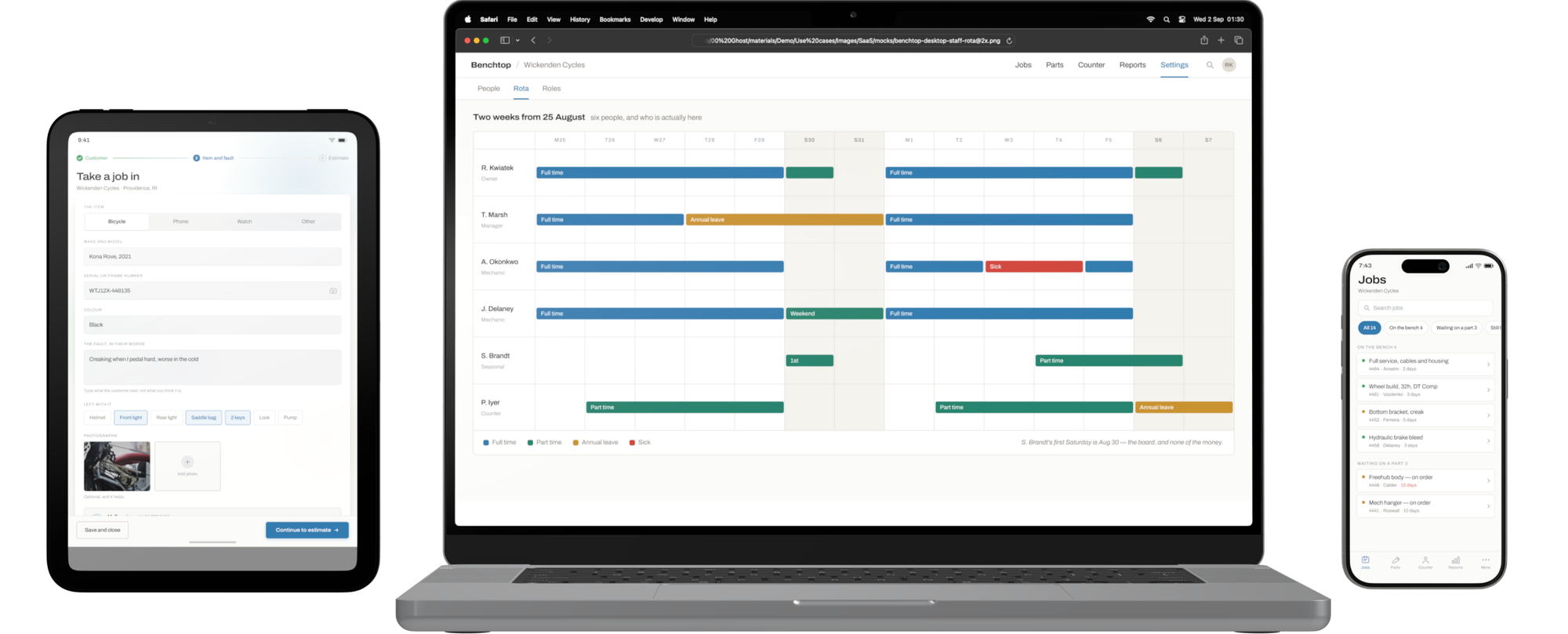
Four things eat a repair shop's week: writing down jobs, chasing parts, keeping customers informed, and working out which job to pick next. Benchtop is built around these four things and all the details in-between that add up.
One job, one card, one link
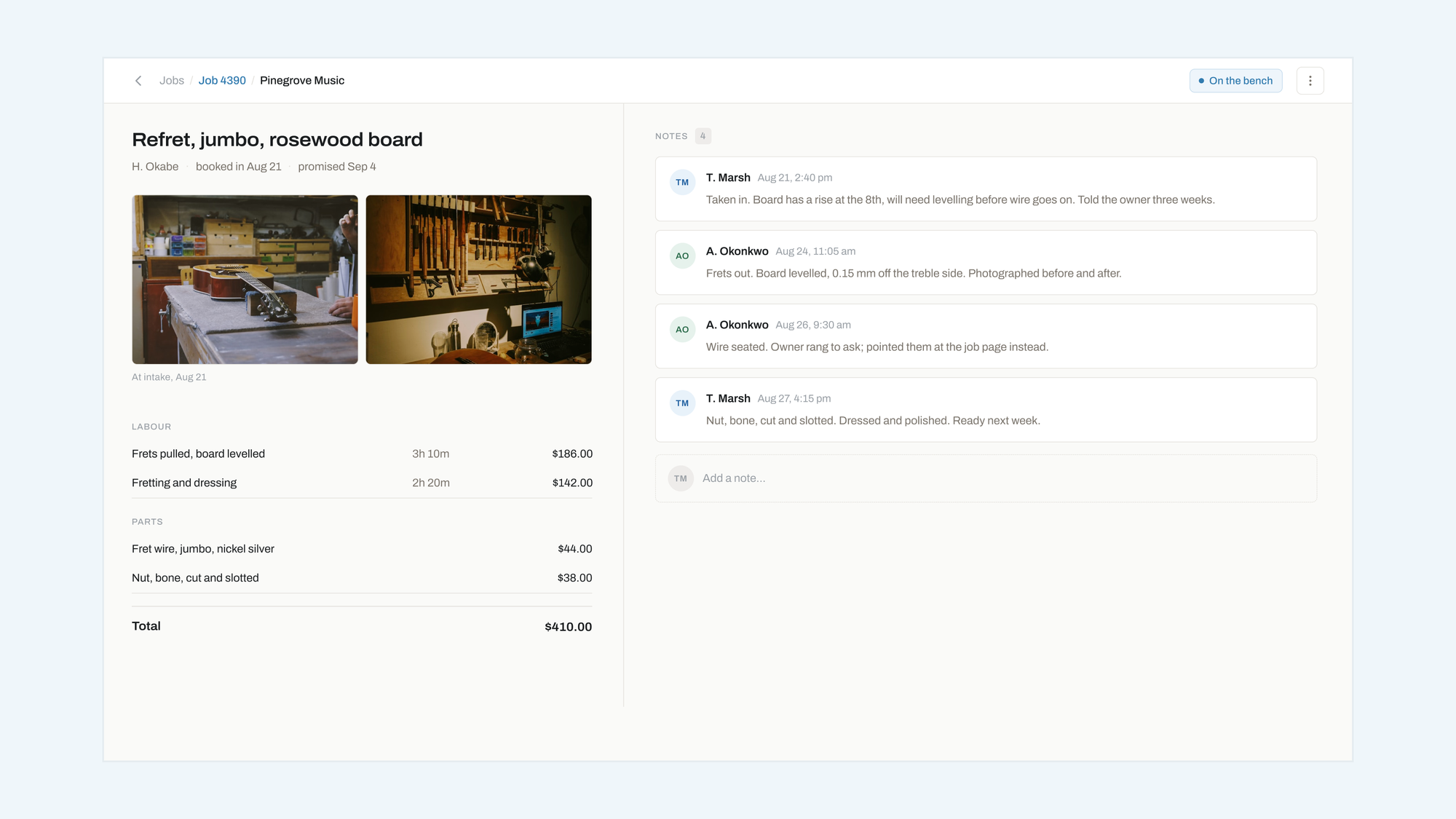
What it is, what is wrong, who owns it, what you did and what it cost. Photographs go on at intake, and notes carry the initials of whoever wrote them in the order they happened — so the record settles the argument rather than starting one.
See the Jobcard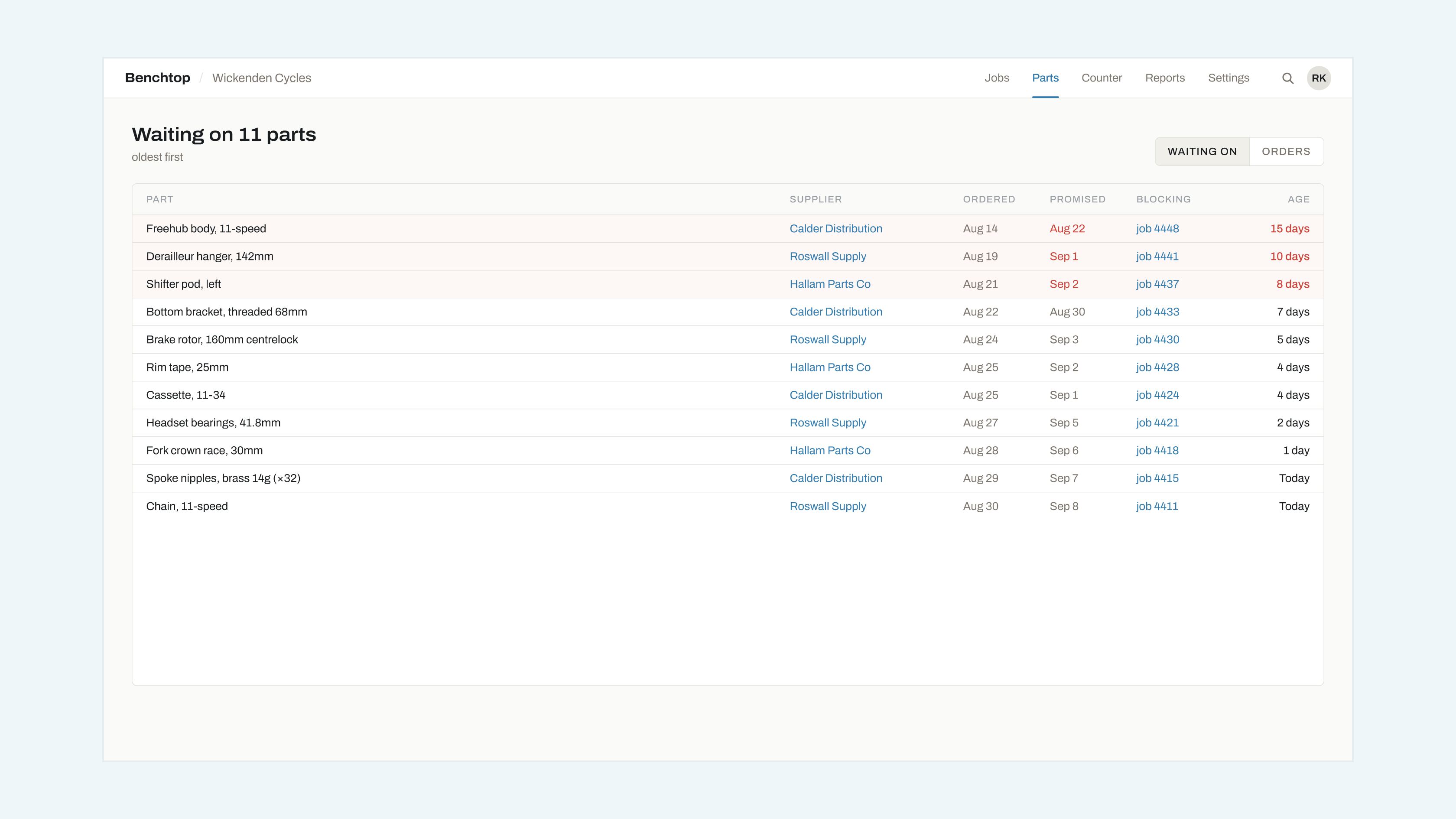
What you are waiting on, and who from
Every job blocked on a part, oldest first, with the supplier and the date they promised. When that date passes Benchtop emails them, in your shop's name, without being asked.
See Partswatch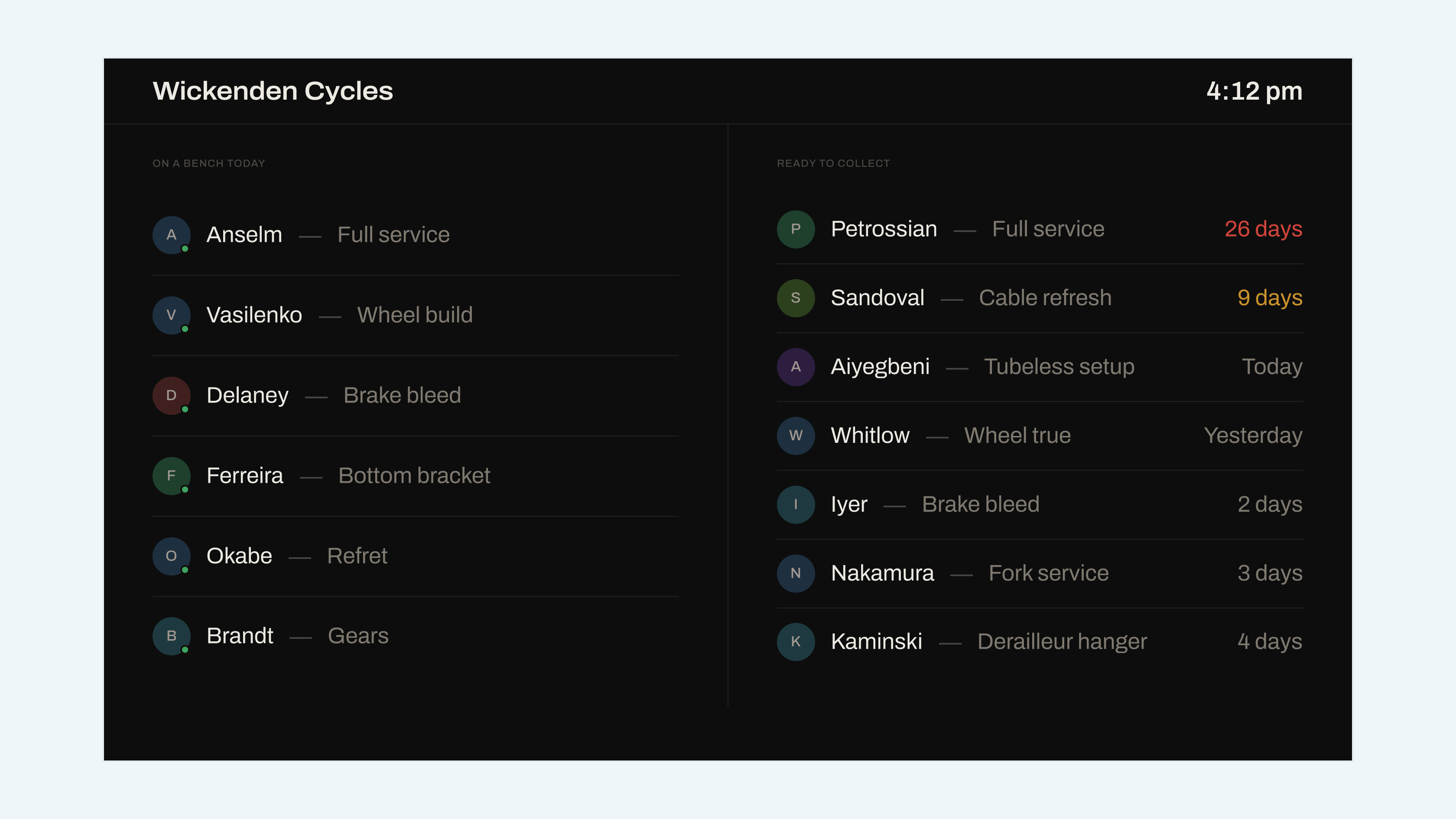
The screen that faces the room
Today's benches on the left, ready for collection on the right, longest wait first. Type twice the size of everything else, because it is read from across a shop by somebody who has just walked in.
See Counterview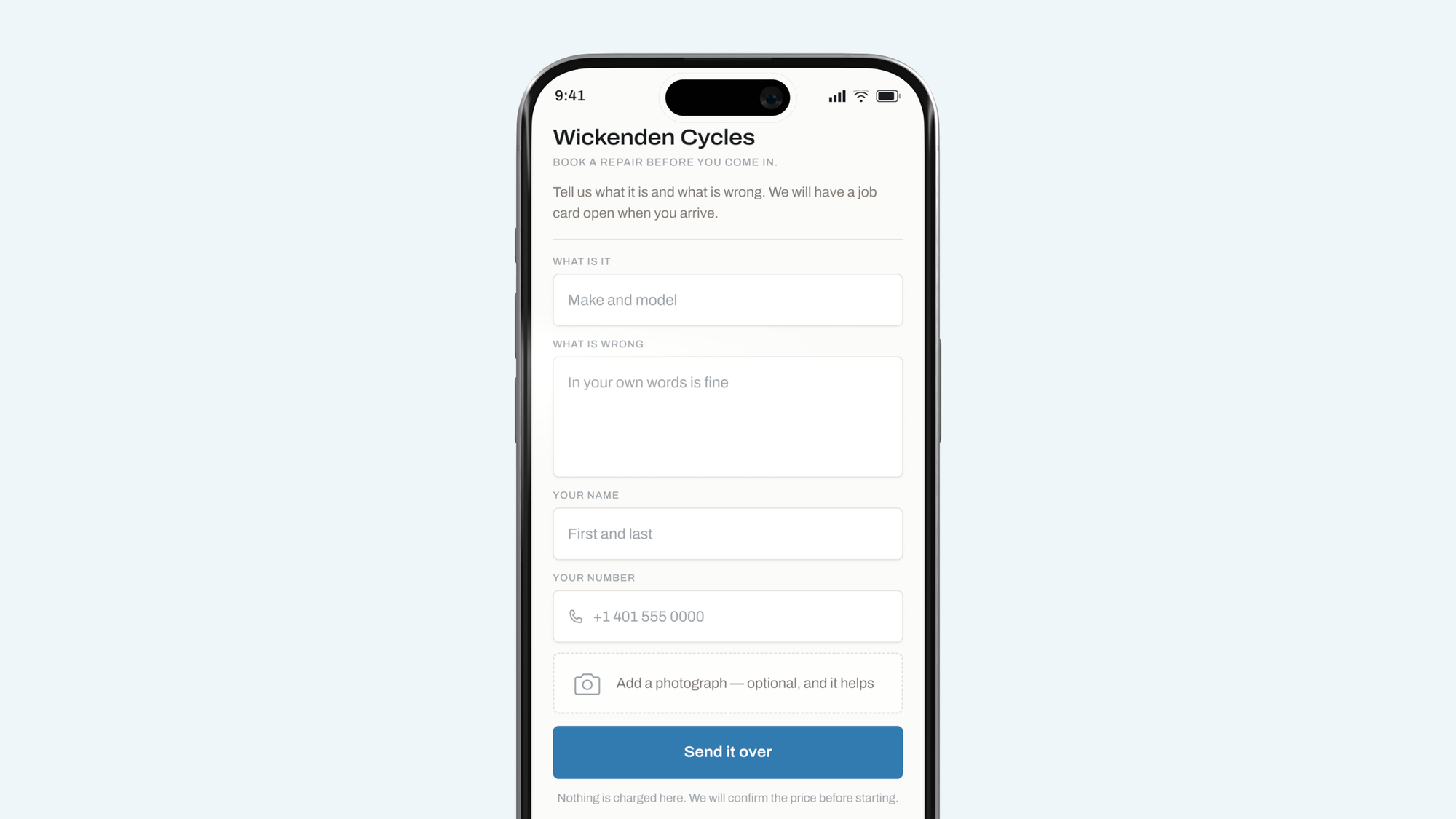
Start a job before you arrive
A booking form on your own website where somebody says what it is and what is wrong. It opens a card in the same queue as the counter, so intake is already done when they walk through the door. It is free while it lasts, and it stays switched off until you switch it on.
See ShopfrontEverything else it does
The rest of the product, including where it runs.
One screen, and most days you never leave it
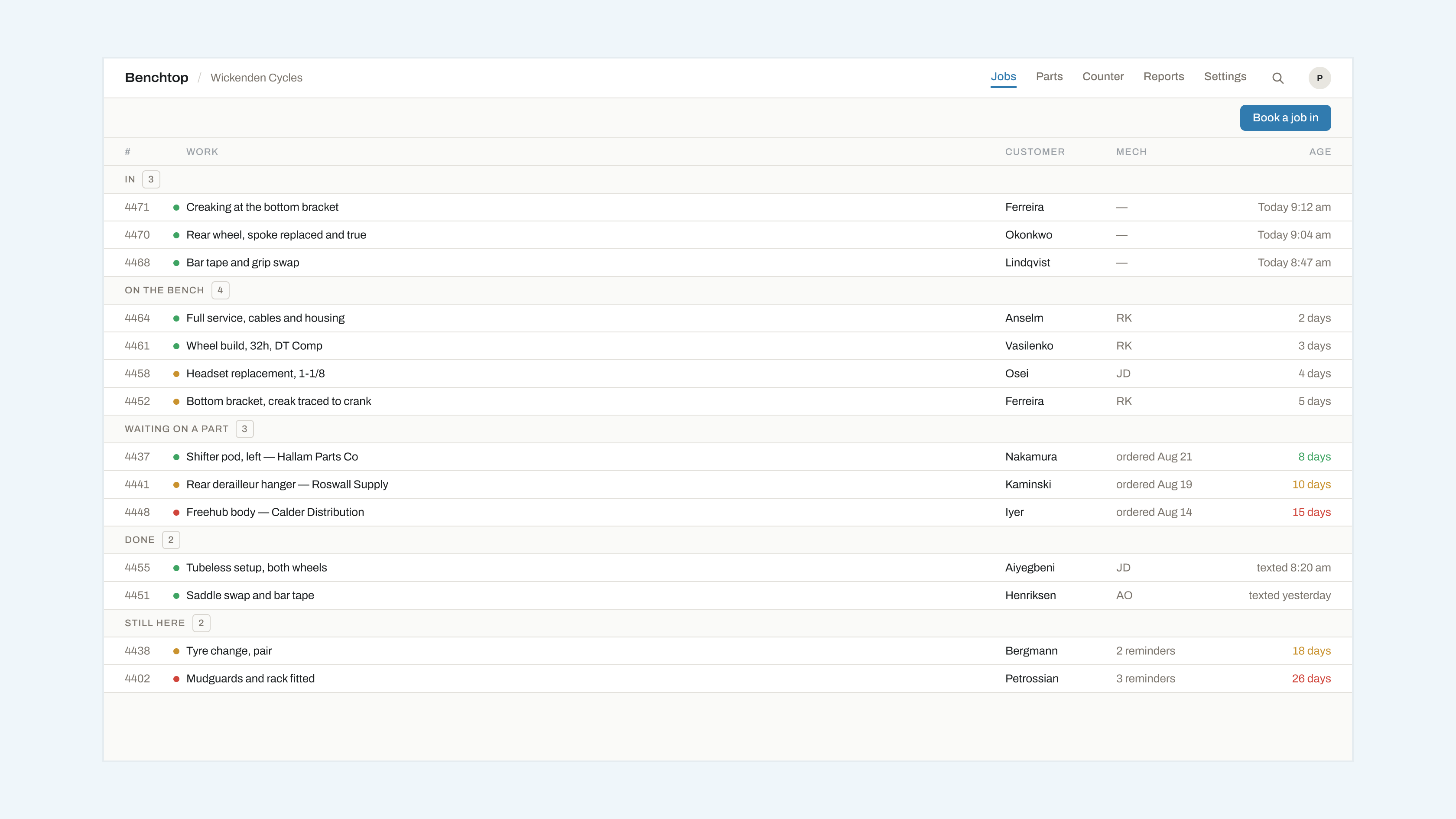
Every open job grouped by status with a count on each group, sorted by promised date and by what is blocking it, so the next thing to pick up is the top of a list rather than a decision.
The week, not just the queue
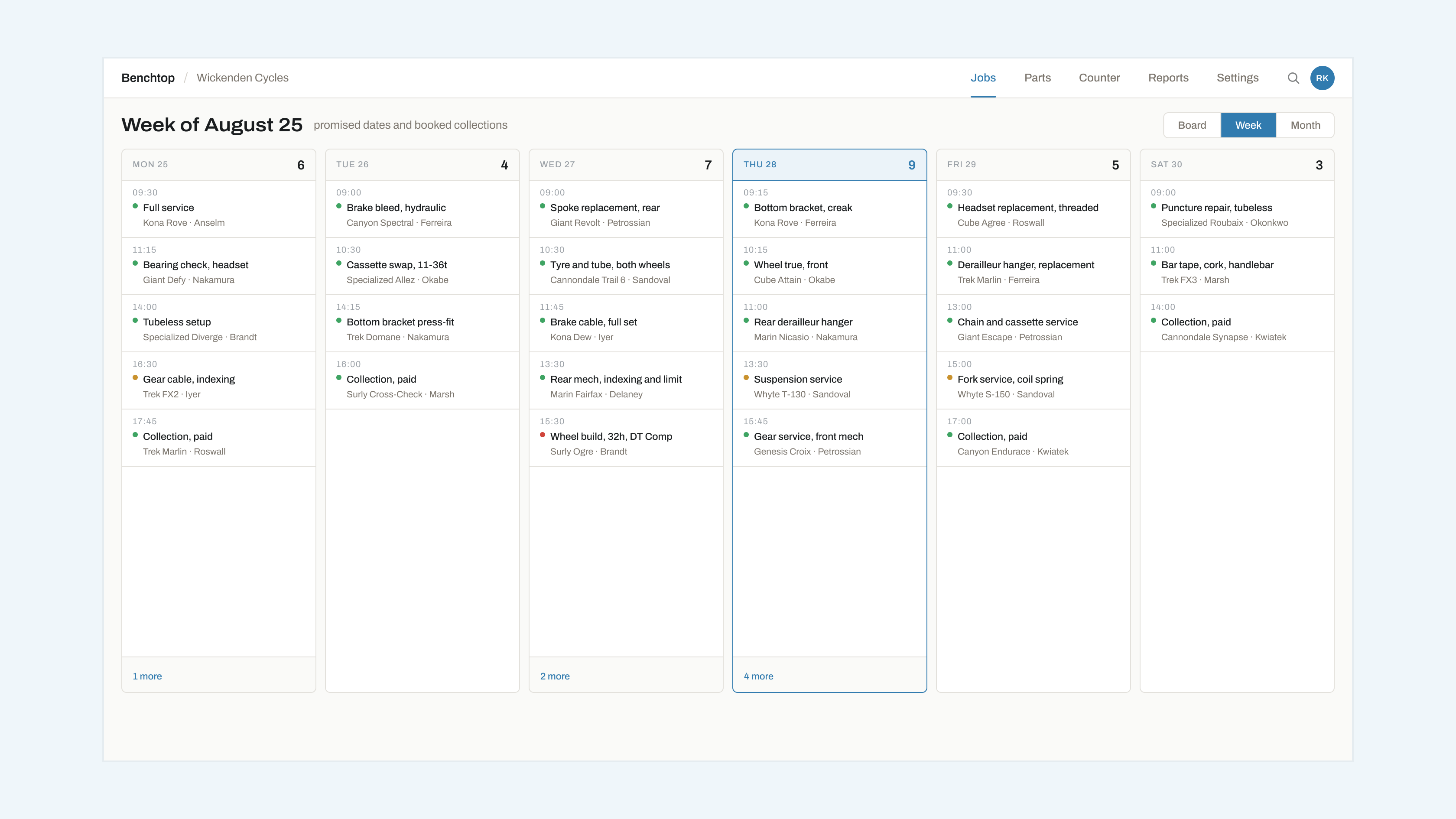
Promised dates and booked collections laid out day by day with a count per day, so an overloaded Thursday is visible on Monday morning rather than on Thursday.
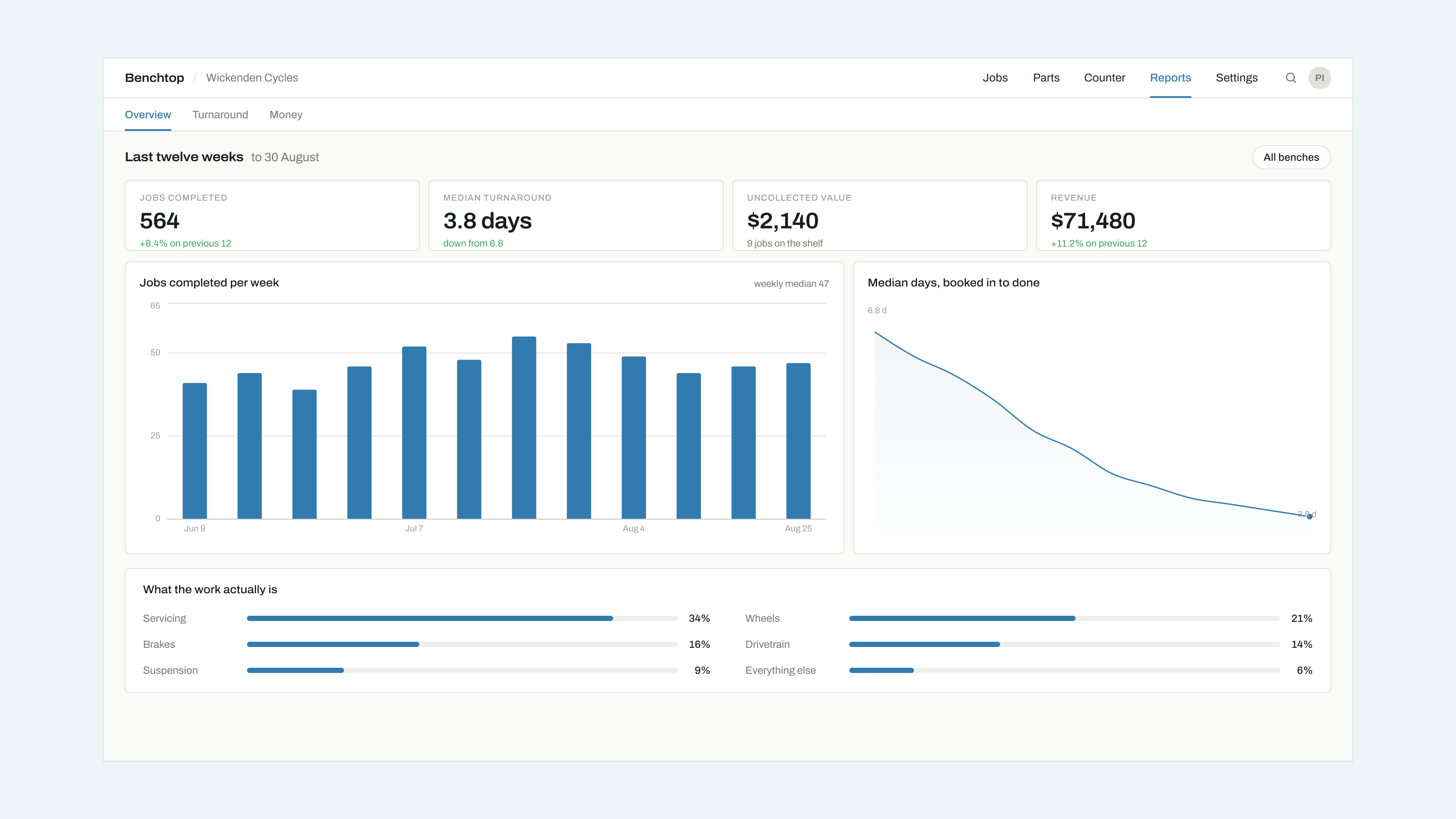
Turnaround, throughput, and what is still on the shelf
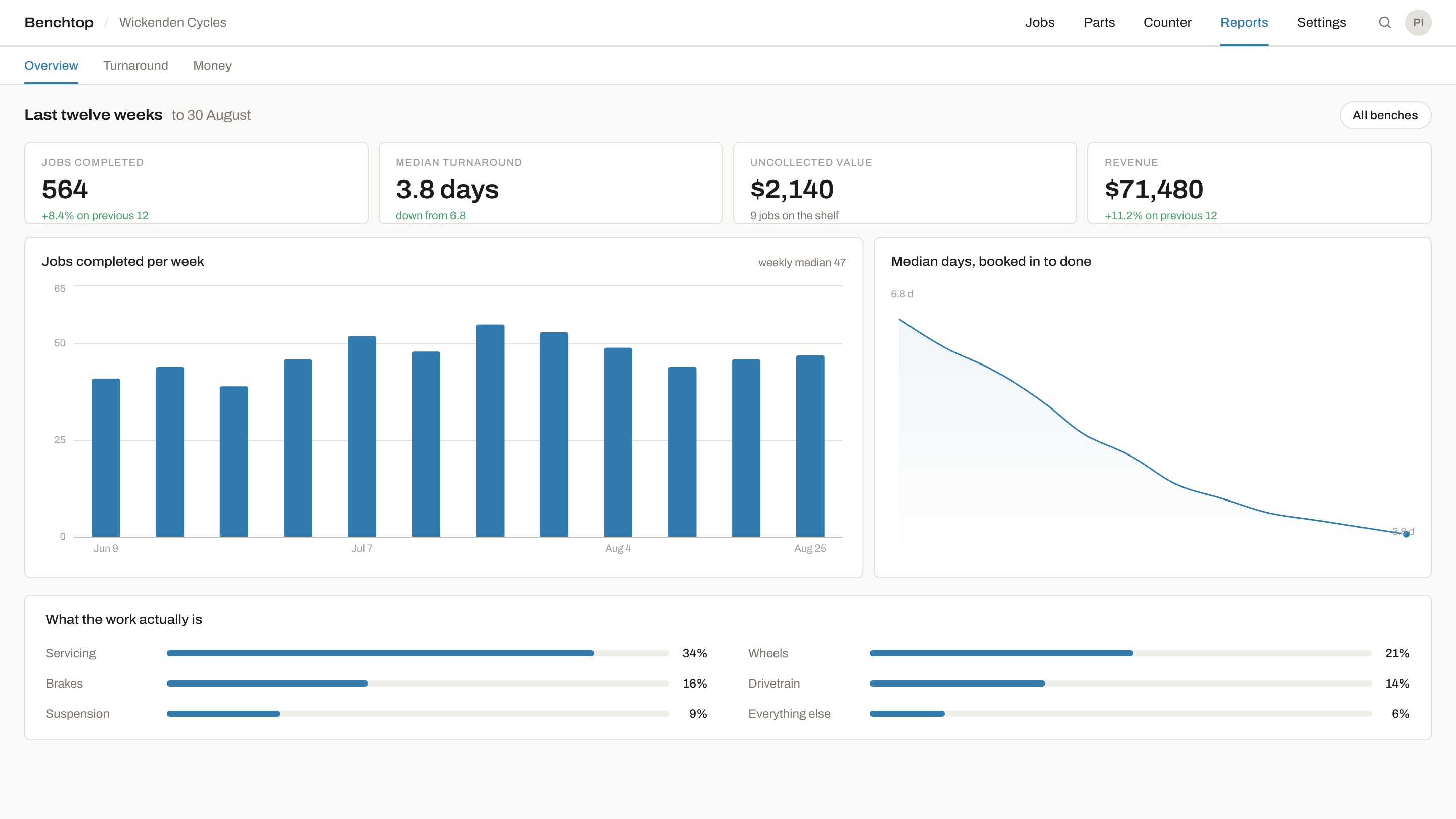
Median days from booked in to finished, jobs completed, and how much finished work nobody has collected. Deliberately the least exciting screen in the product.
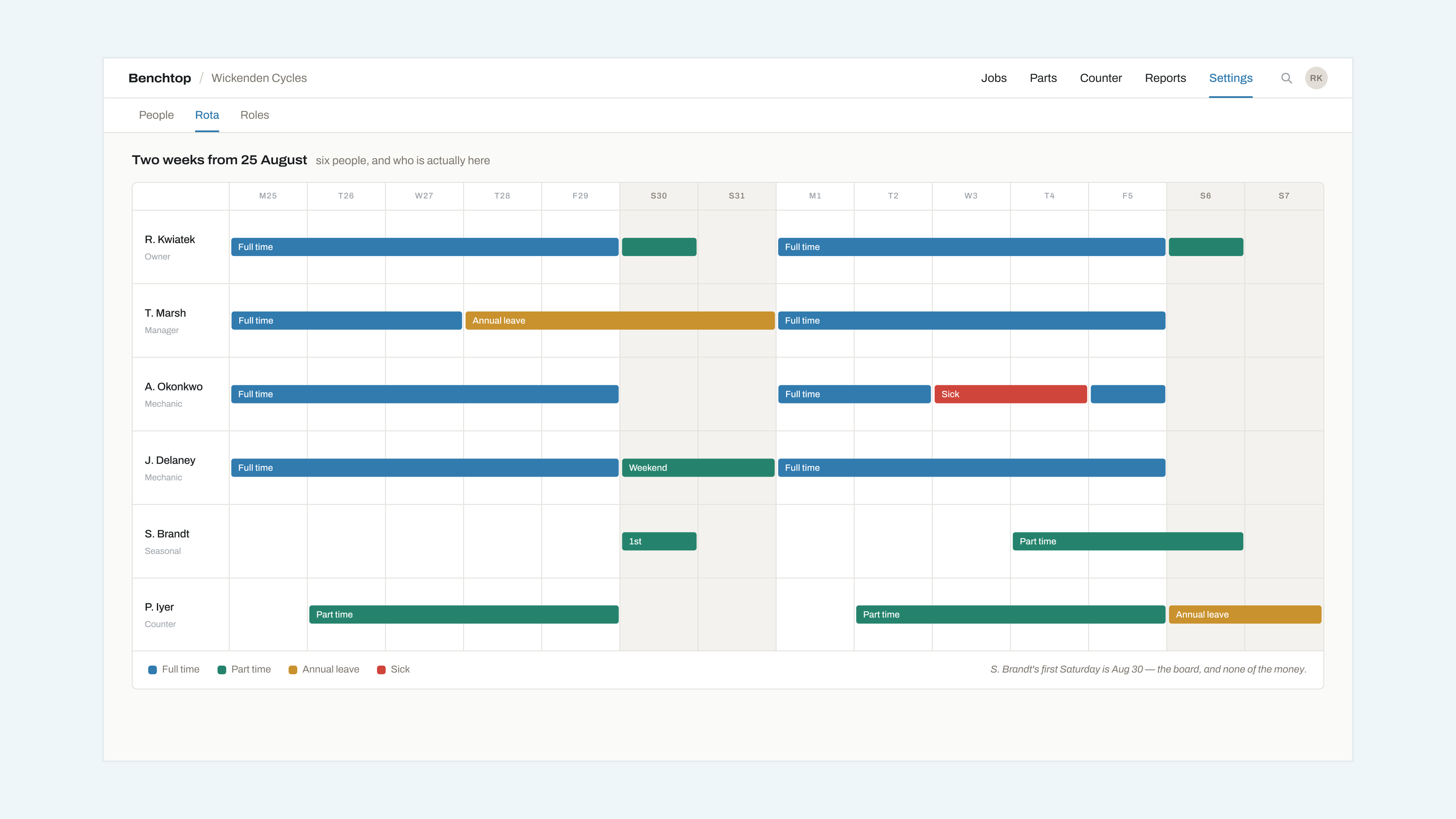
Who is actually in on Saturday
A fortnight of shifts, one row per person, colour-coded by full time, part time, annual leave and sick — with roles deciding who can take work in, change a price and see the money.
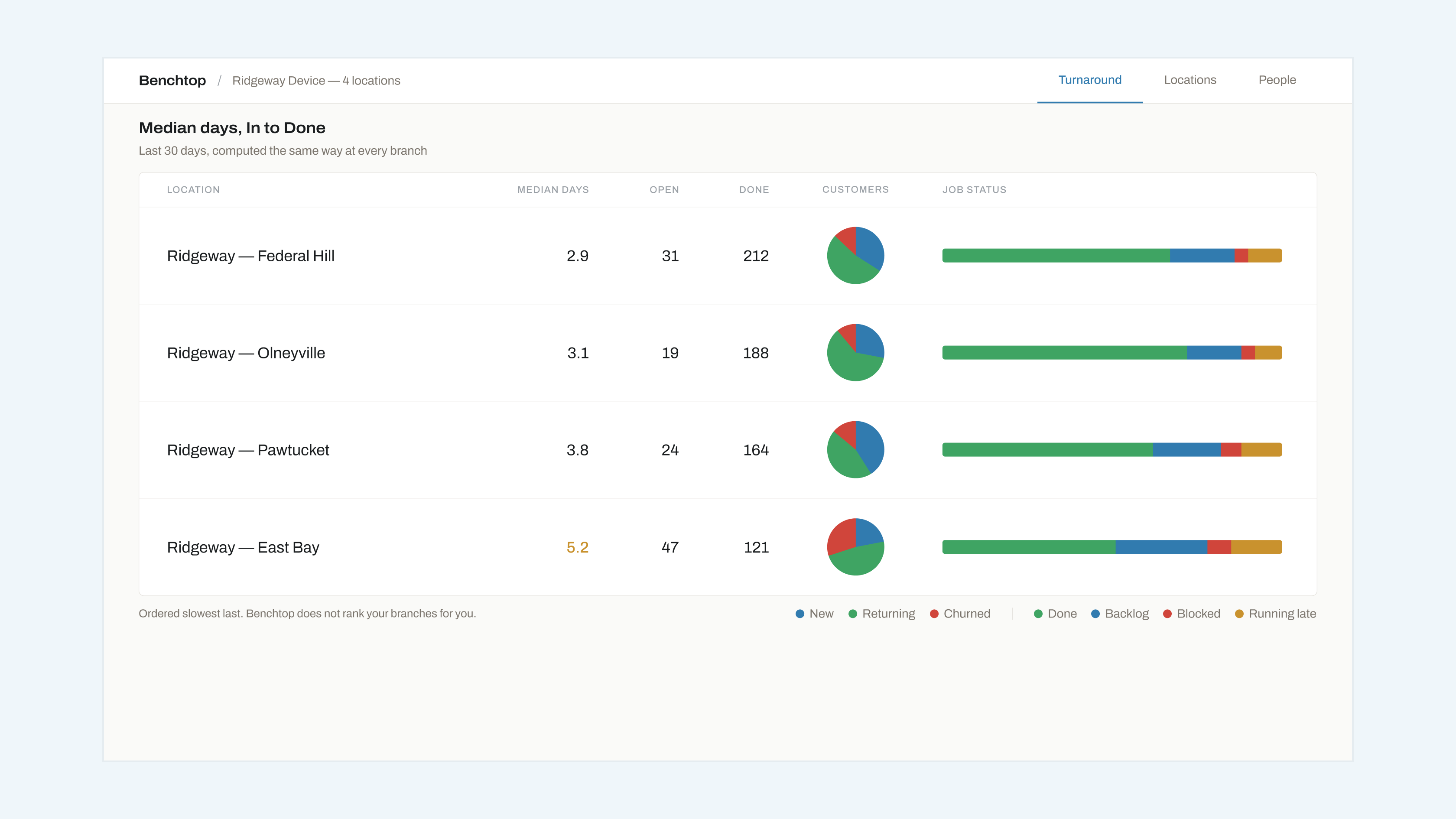
The same answer from every branch
One turnaround number, computed the same way everywhere, with roles granted per location and revoked centrally when somebody leaves.
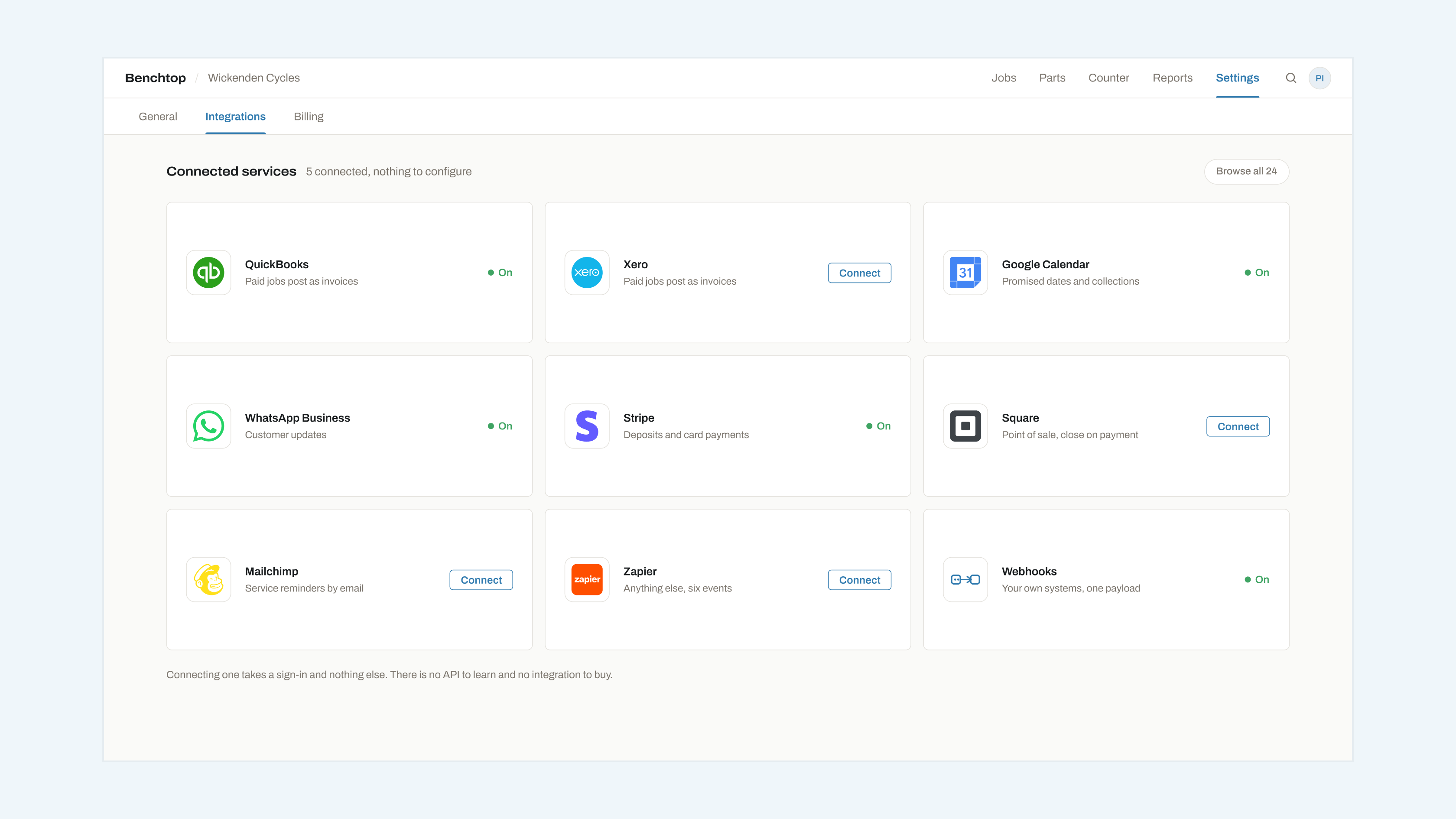
The things you already pay for
QuickBooks and Xero for the books, Google Calendar for promised dates, WhatsApp Business for the messages, Stripe and Square for money. Connecting one takes a sign-in.
And all the small things
The parts of the job nobody demos but everybody uses daily.

Job cards
Photographs taken at intake, notes stamped with who wrote them, labour and parts totalling to the figure the customer also sees, and a link they can open without an account.

Parts on order
Everything you are waiting on in one list, oldest first, each line against the job it is blocking — and an email to the supplier the morning a promised date passes.

Counterview
A screen that faces the room and answers the question people come in to ask, so nobody has to interrupt a bench to find out whether something is ready.

Shopfront
A booking form on your own website, in your own colours, feeding the same queue as the counter. One list to work from rather than two to reconcile.

Customer messages
Four of them, sent on the status changes that matter, worded by you and going out from your shop's name. Nobody at the counter types any of them.

Deposits
Asked for on the job and paid by the customer on their own page, so a long build is not floor space you are lending out for free.

Photographs
Taken at intake on the phone in your apron and attached to the card, which is the record you reach for when somebody disputes the condition it arrived in.

People and roles
Who can take work in, change a price, see the money and administer the account — set per location, and revoked in one place when somebody leaves.

Webhooks
Six events and one payload shape, pointed at whatever runs your till, so a paid job can close itself without anybody re-keying it.
Hear it from our customers
Don't just take our word for it
Spend your week on the bench, not the counter.
Start improving the efficiency and growth of your workshop today. Free on one bench, for as long as you want it.
Start free trial