
Wickenden Cycles and the spring queue
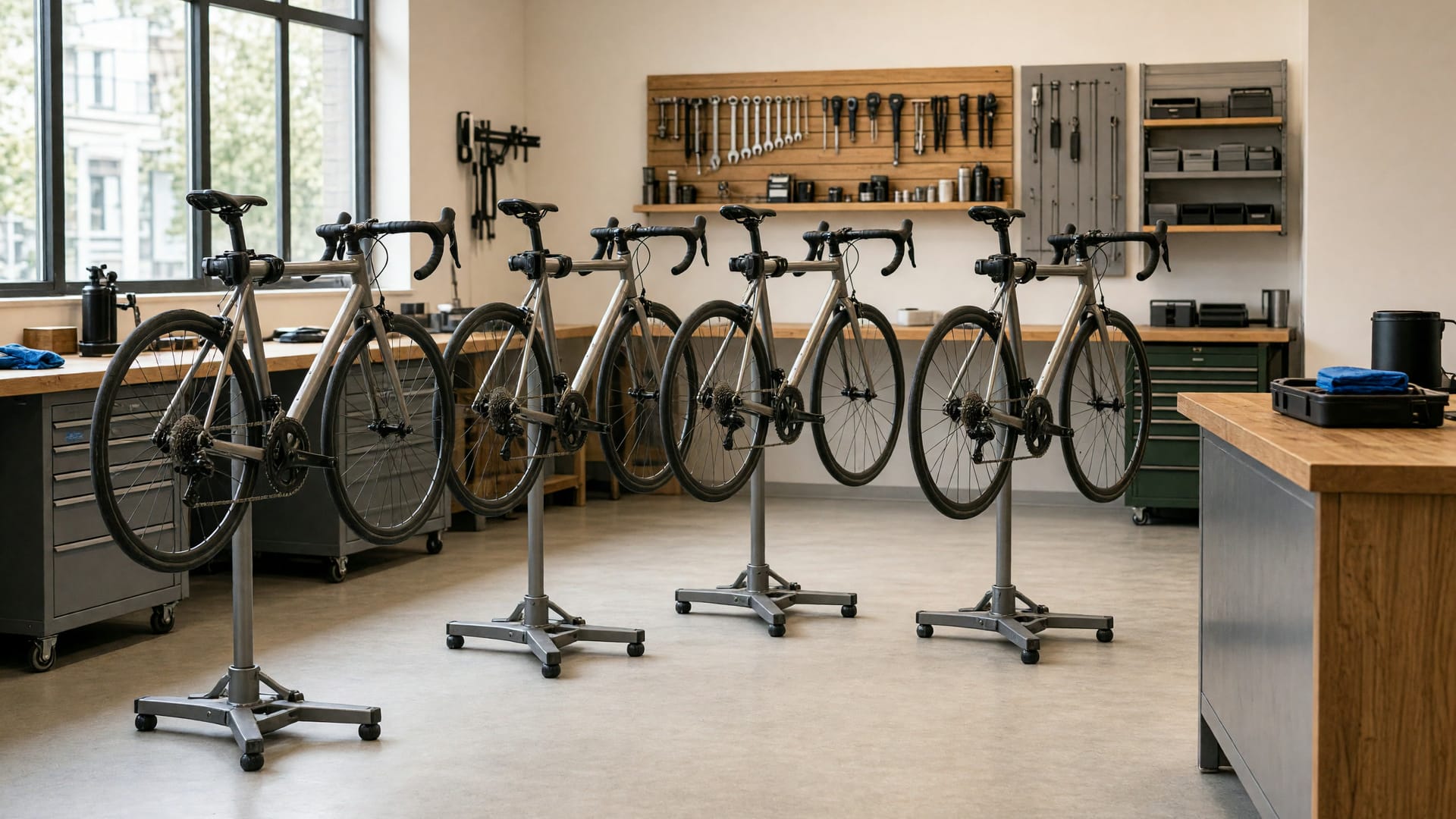
We are four benches and a counter, on a street that already had two other bike shops on it. From the first warm Saturday in March until the end of June we take in more work in a week than we can finish in a week, and every single person who leaves a bike with us knows that.
That part has not changed and it is not going to. What changed is what it costs us to run it.
The April we counted
Two springs ago my partner kept a tally sheet by the till for a fortnight, because we wanted to know whether the phone was actually as bad as it felt. It was worse. Two hundred and forty calls in ten working days, and by her count a hundred and ninety of them were one question: is it ready yet.
Not one of those calls made a bike get finished sooner. Every one of them took somebody off a bench or away from a customer standing in front of them. In the middle of the season that is the whole problem — the work is not the constraint, the interruptions are, and the interruptions come from the fact that nobody outside the shop can see anything.
We had a diary, a wall of tags, and a whiteboard that got wiped every Monday. All three were accurate. None of them were visible to the person who wanted to know.
Two afternoons, and the frame numbers
We moved over in the last week of February, deliberately, because doing it in April would have been madness. It took two afternoons.
The bit that took the longest was not the software. It was deciding what we actually record when a bike comes in. We settled on the frame number, the groupset, the condition it arrived in and a photograph, because those four things are what every argument in this trade is about six weeks later. Once that was decided the rest was typing.
The first thing we turned on was the promised date. Not an estimate, not "end of the week" — an actual date on the job that the rider can see on their own page, and that changes visibly if it moves. The second thing was the message when the bike is done.
What the numbers did
The queue in April was still three weeks long. It is always three weeks long; that is what a good spring looks like. But the counter got about eighteen hours a week back, which across March to June is most of a bench.
We used it to take more work. Not more staff, not longer days — the same four benches, running about a fifth more jobs through them across the season, because the person on the counter was doing intake instead of reassurance. Median turnaround came down under two days for a standard service, which we could finally measure because the dates were real.
The thing I did not expect was the deposits. We ask for one on a wheel build now, and the number of finished builds sitting on the rack in July went from a running embarrassment to nearly none.
Somebody asked me last season whether it made the work faster. It did not. It made the work visible, and it turns out that is most of what we were missing.