
Why we never say "ticket"
There is no word for it in our software, so I should explain what we are not saying and why.
Where the word comes from
A ticket is a slip of paper you are issued so that a queue can be ordered. The deli counter, the passport office, the tyre place. Its whole function is to answer the question whose turn is it, and it does that beautifully, which is why the mechanism is two centuries old and shows no sign of going away.
Software borrowed it from the help desk, and the help desk borrowed it from the queue. In the 1980s, when a company had one IT department and four hundred people who could all break something, the deli counter was exactly the right model. Somebody has a problem, they take a number, the number is worked in order, the number is closed. Every piece of business software written since has inherited the noun from that lineage, mostly without anybody choosing it.
What a ticket implies
Four things, and they travel with the word whether you want them or not.
You are issued one. It is given to you by an institution. You did not make it and it is not yours.
You wait. The ticket's job is to make waiting orderly. It is a promise about sequence, not about outcome.
It is closed by somebody you will not meet. Ticket systems are built for volume, and volume means the person who closes it is whoever was free.
Closing it is the goal. This is the important one. The metric a ticket system optimises, always, is time-to-close, because that is the number the model makes available.
What a job is instead
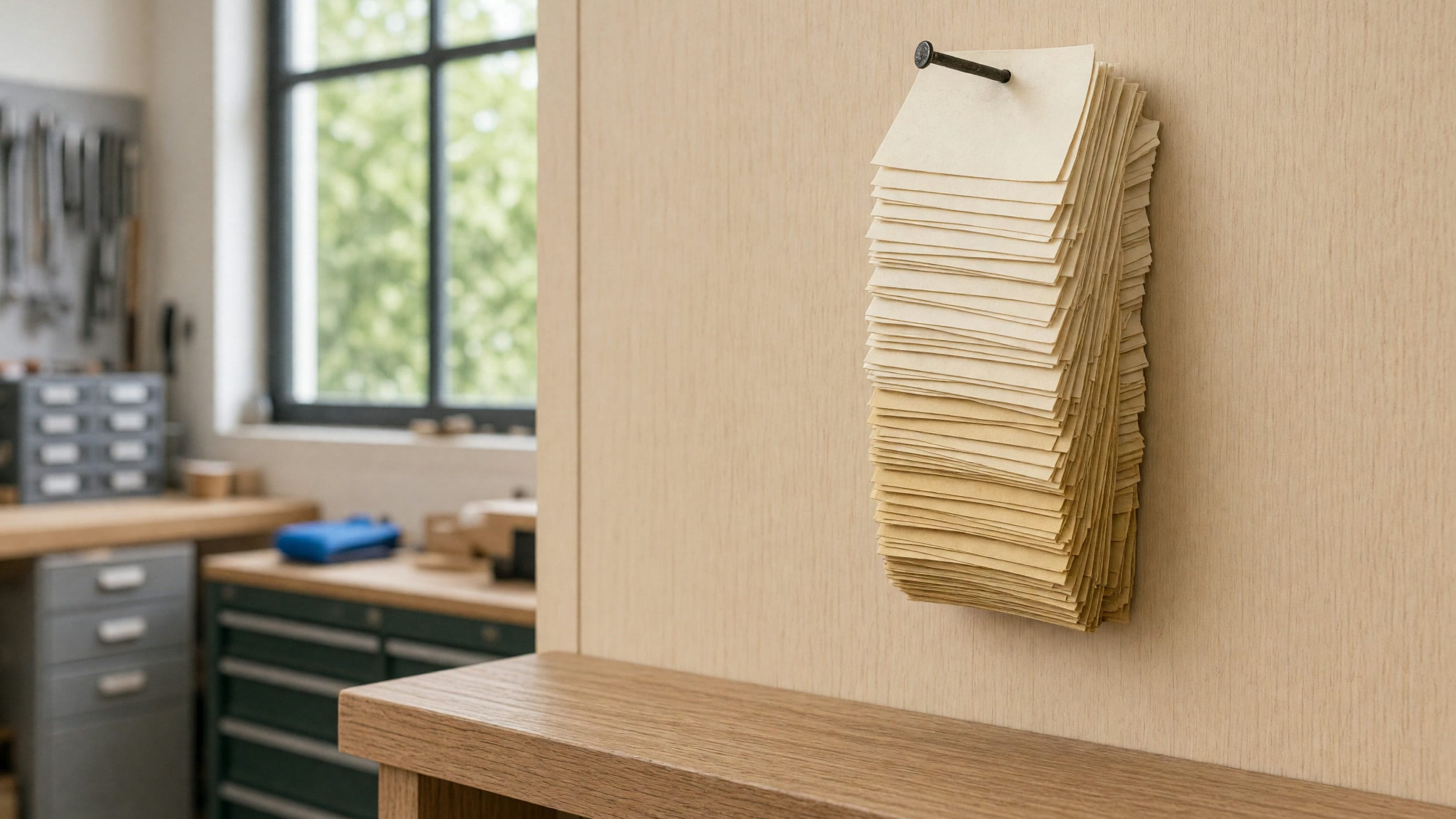
A job has an object in it. Somebody's bicycle, somebody's guitar, somebody's grandfather's watch. It exists because a physical thing is in your building and its owner wants it back.
A job is being done by a specific person. Not by a department, by whoever is at that bench, and if you ask a shop who has got the Ferreira bike they will say a name, immediately, without looking anything up.
And a job ends when the object leaves. Not when a record is marked resolved — when somebody comes and collects it. That is a completely different event from closing a ticket and it happens at a completely different time, sometimes weeks later, which is why we have a status called Still here and a help desk does not have anything like it.
Why this is not pedantry
Because the word shapes the software, and the software then shapes the shop.
A ticket system optimises for closing. Every dashboard it can build is about how fast things close, because open-and-closed is the only structure in the data. Put a repair shop on one and you get gentle, constant pressure to mark things resolved — and a repair shop that optimises for marking things resolved is a repair shop that sends things home not quite fixed.
I have watched this happen. Not to us, but I have watched a shop with a well-meaning generic system quietly develop a habit of closing jobs at the point the mechanic finished rather than the point the customer collected, because the board looked better that way. Six months later they had no idea how much finished work was on their shelf, because their software had no way to represent it and had therefore taught them not to look.
The vocabulary did that. Not deliberately, and not because anybody was careless — just because a word arrived carrying a model, and the model was built for a deli counter.
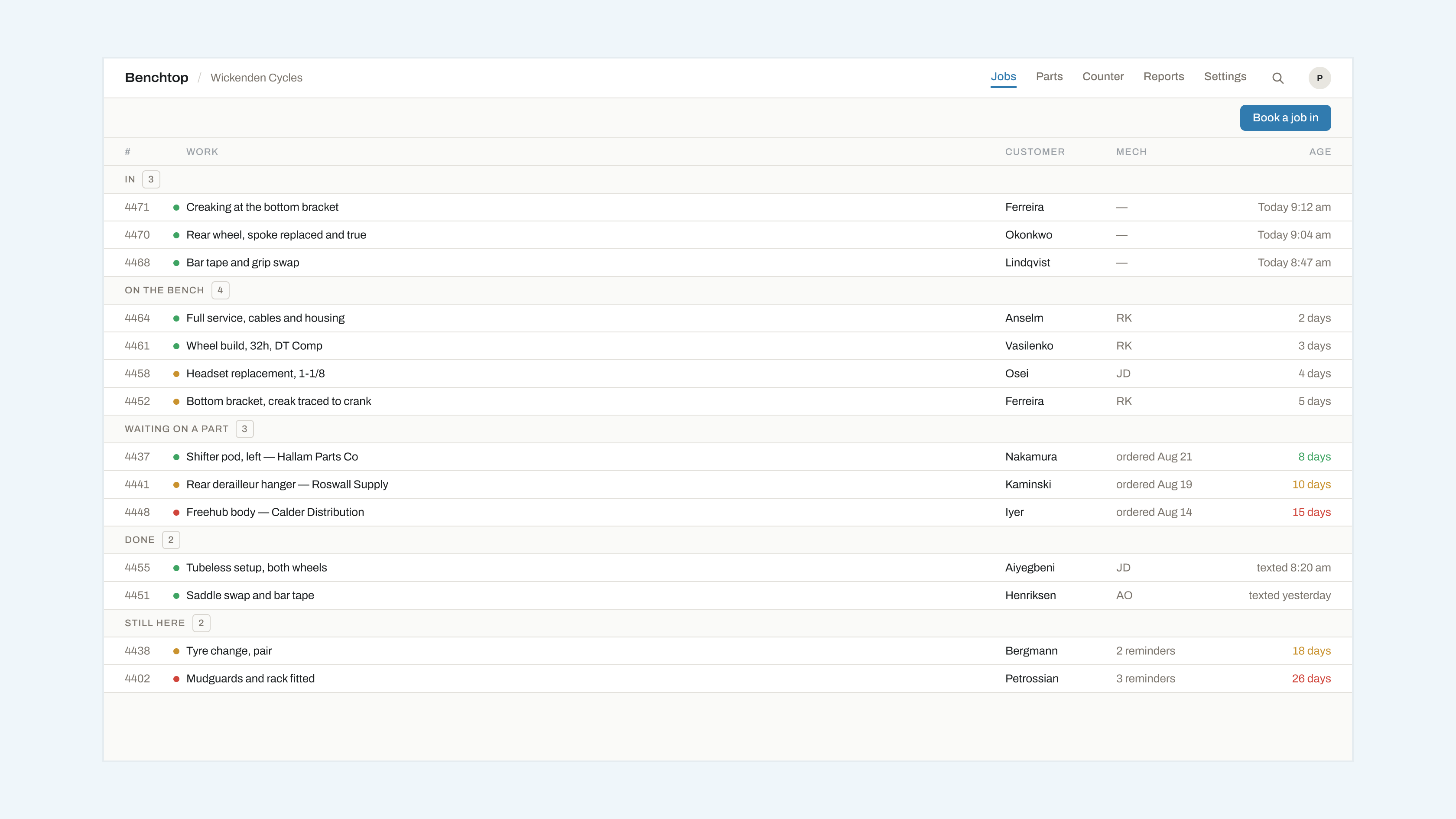
Our board groups by what is physically happening to the thing. In, on a bench, waiting on a part, done, still here. There is no open-and-closed axis anywhere in it, and that is not a design flourish — it is the same argument as this post, expressed as columns.
The concession
For an enormous number of businesses, ticket is exactly the right word.
If work arrives as requests rather than objects, if the queue order genuinely is the main question, if whoever is free should take the next one, and if closing really is the goal — then you want a ticket system, you want it badly, and the good ones are very good. Buy one. Do not buy ours.
We are not making a general claim that the word is bad. We are making a narrow one: it does not describe what happens when somebody hands you a bicycle, and we would rather use the word the trade already uses than the one the software industry handed us.
The trade's word is job. It has always been job.